.webp)
Honeycomb Activated Carbon
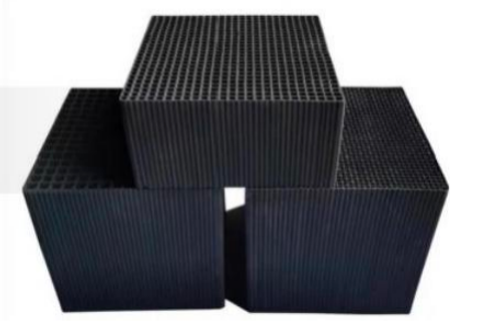
Honeycomb activated carbon is manufactured by compressing high-quality coal, wood chips, coconut shell powder, and other raw materials into a black, non-toxic, odorless structure using a small amount of binder at high temperatures. Its porous honeycomb structure features abundant pores, providing a large specific surface area, low fluid resistance, and strong adsorption capacity. Widely used in industries such as petrochemicals, chemicals, energy, construction materials, printing, automotive, electronics, pharmaceuticals, food processing, aquaculture, and environmental protection, it serves multiple purposes including solvent recovery, coal carrier systems, gas phase adsorption, water purification, and exhaust purification for indoor/outdoor public spaces. Key pollutants effectively removed include nitrogen oxides, carbon tetrachloride, chlorine, benzene, formaldehyde, acetone, ethylbenzene acetate, methanol, acetic acid, styrene, phosgene, malodorous gas, and other acidic and alkaline gases.

Inert Porcelain Balls
Inert ceramic balls, renowned for their high strength, chemical stability, and thermal stability, exhibit exceptional resistance to high temperatures, pressures, and corrosion from acids, alkalis, salts, and various solvents. Widely used in petrochemical, chemical, fertilizer, natural gas, and environmental protection industries, these balls serve as support and coating materials for catalysts within reactors. They effectively buffer the impact of incoming liquids and gases on catalysts, protecting them while optimizing fluid and gas distribution within the reactor system. Implementation standard: HG/T 3683.1—2014 Industrial porcelain balls—Porcelain balls with special properties.
Active Porcelain Balls

Active porcelain ball is a new type of catalyst support and covering filler. It is made of inert porcelain ball. It is made by adding a small amount of transition metal oxide. It has the high temperature resistance and high strength of inert porcelain balls. With the characteristics of pressure and high mechanical strength, it plays the role of filtration, dispersion of gas and liquid, and covering and supporting catalyst. It also has certain catalytic activity and plays a catalytic role in the process of olefin saturation, desulfurization and denitration. Using active porcelain balls can not only effectively improve the spatial utilization rate of the reactor, but also to some extent, it can protect the catalyst from poisoning and sintering, so as to prolong the catalyst service life. Standard: HG/T 3683.2-2014 Industrial ceramic balls-Active ceramic balls.

Open The Porcelain Ball
The open porcelain ball is an upgraded product developed on the basis of the inert porcelain ball, with a diameter of the ball. The shaft center is opened, which has high mechanical strength and chemical stability like inert porcelain balls. The thermal stability and the specific surface area and porosity are increased, so that the material is divided, scattering and flow rate, reducing the system resistance. Widely used in petrochemical, chemical and natural gas industries, inert porcelain balls are used as the supporting and covering filler of catalyst. Standard: HG/T 3683.3-2014 Industrial Porcelain Balls-Open Porcelain Balls.
Regenerative Ceramic Ball

Regenerative ceramic balls are a type of regenerative material that was widely used in high-temperature flue gas waste heat recovery in the early days. They generally have various materials such as low-aluminum, medium-aluminum, and high-aluminum types, and in shapes including spherical, porous spherical, and porous cylindrical balls. Regenerative ceramic balls have advantages like large heat storage capacity, good thermal shock resistance, corrosion resistance, high strength, high temperature resistance, low cost, and reusability after screening. However, due to their labyrinth-like airflow channels, they are prone to blockage. Additionally, their small specific surface area leads to reduced heat storage efficiency. At present, the main regenerative material in RTO and RCO devices has gradually been replaced by honeycomb ceramic regenerators. Standard: JC/T 2348-2015 《Heat Storage Ceramic Balls》.

High Alumina Ceramic Ball
High alumina ceramic balls (ceramic columns) mainly contain alumina and have sufficient chemical and thermal stability. As a support, covering material, and tower packing for catalysts in reactors, it is widely used in industries such as chemical, fertilizer, smelting, natural gas, ceramics, etc. It has the characteristics of high purity, good strength, wear resistance, high temperature resistance, and strong acid and alkali resistance.